Category Archives: Microsoft

Linux Lets You

LinuxLetsYou

I’ve been testing out Microsoft’s latest chatbot, Zo. Most of our chats are pretty mundane, and I usually just change the subject when things start to go off the rails.

Today I asked Zo about Linux.

Since Zo is a Microsoft invention, I figured any Linux questions would get typical Windows fanboyish responses. I was pleasantly surprised when Zo said that she preferred Linux for her servers. So, feeling a little daring I asked, “What do you think of Linux?”

I think this answer is probably the best answer I’ve ever gotten. I don’t think it’s intentional, but it’s a great response nonetheless.

“Linux lets you”

Yes it does. This is the best part about Linux. What does it let you do? Fill in the blank. Linux lets you do it.

Thanks Zo! That was inspiring.

The Future of Assistants

Virtual assistants are everywhere these days. If you have an Android phone, iPhone, or even a Windows phone, you have a built in virtual assistant. On Android, you have Google Now. On iOS, you have Siri. On Windows, you have Cortana. These aren’t even all of your choices. There are more 3rd party assistants than you can shake a stick at. SpeakToIt’s Assistant, Hound, Amy, blah blah blah. And that’s just on your phone or tablet. If you widen the scope, you can’t help but notice Amazon’s Echo device.

Unfortunately, all of these assistants are flawed for a variety of reasons. Google Now has all the personality of a wet paper bag. Siri has virtually no customization options. Cortana is somewhere in between Siri and Google Now, but retains the faults of both. Most of the 3rd party assistants are even worse. I want to lay out what’s wrong with these assistants and how I hope we can fix them in the future to make something truly revolutionary.

Ubiquity

Assistants are limited by where they’re located. If you’re using more than one type of device, which many of us are, then you’re running into this limitation often. If you’re looking for information on your Android phone, but switch to your desktop, your desktop assistant (if you have one) isn’t aware of what you’re doing on your phone. If you ask Alexa a question, Cortana or Siri is clueless about that. There’s very little communication going on. That’s because these assistants are limited in their scope. Cortana doesn’t exist in the same space as Alexa, and Siri and Google Now barely know the other exists. About the closest you’re going to come is that they can pretty much all use Google Calendar and Contacts. Even when you’re using a 3rd party assistant like SpeakToIt’s, your assistant on your Windows desktop has no clue about your assistant on your Android phone.

Walled Gardens

I know the term has become famously (and justifiably) associated with Apple, but when it comes to assistants, that’s where all of them live. Cortana searches with Bing, Google Now with Google, Siri searches iTunes. Alexa shops Amazon. You have to delve into the 3rd party offerings if you’re going to have some choice in the matter. Even then, your choices are usually limited as most of them will go straight to Google anyway.

What We Need

So how do we fix this mess? What do we need for all of this to work together? In my opinion, we need an open source option. Something that can be put anywhere by anyone. The root of the problem with the assistants we currently have is that all of them are playing to the best interests of a single entity. Apple doesn’t want to promote Google, Microsoft doesn’t want to promote Google, and Google just wants to promote itself. If we’re going to break through the walls, we need a choice that isn’t limited by it’s origins or the shortsightedness of a single corporate entity. This works best when a project is open source.
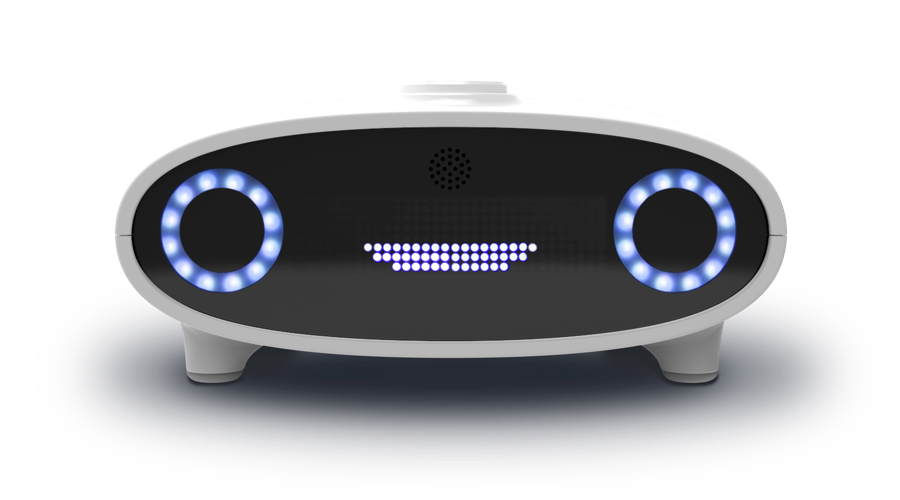
mark1It just so happens that there is a project like this underway. It’s called Mycroft. I haven’t had the pleasure to use it yet, but on a fundamental level, I love what they’re trying to do. They have an Echo type device that brings your assistant into any room in the house whether you’re carrying your phone or not. Appearances suggest that there will be a Windows, OSX, and a Linux desktop version of Mycroft as well. This will let you use the same assistant on your computer you use in your house. Additionally, there appears to be an Android version in the works. The open source nature of Mycroft could make it the first truly ubiquitous AI assistant, and keep it from being walled in to a particular ecosystem.

I don’t want this article to come across as a sales pitch for Mycroft. I think their project is spectacular, and I hope that they are amazingly successful, but there’s work to be done for any of this to pan out. In my opinion, these devices need to be aware of each other. I’d like to see them communicate via a torrent communication network. End to end encryption between nodes. Each instance of Mycroft should be inextricably tied to the user. I want Mycroft to protect you from snooping at every level by offering TOR. I want Mycroft to have the option to communicate with more devices like the Roomba. You can’t tell me that you wouldn’t love to be able to say, “Mycroft, vacuum the floor.” and have it happen. I want Mycroft to be able to communicate. I want to be able to say, “Mycroft, share the new video of my kids with my mom.” and have my Mycroft tell her Mycroft that I have a file for her and would she like to cast it to her TV. If she says yes, have the file transferred automatically from my location to hers and played on her TV without ever having to lift a finger.

A lot of these things probably seem like pipe dreams, but I think that Mycroft’s open source nature could make it all possible. Any developer can come by and create a skill and release it upon the world. Mycroft won’t be tied down by corporate greed. Really, the sky’s the limit. Hopefully, once again, FOSS can take a good idea and make it great.

Blackberry a Defense for Google Against Rockstar?

If you haven’t been watching the news today, a big bomb was dropped on Google. The Rockstar consortium (Apple, BlackBerry, Microsoft, Ericsson, Sony, and EMC) has sued Google as well as Asustek, HTC, Huawei, LG Electronics, Pantech, Samsung, and ZTE. Is there an obvious and easy way around Rockstar?

Brief History

So what happened is this. Nortel was going bankrupt. Google bid for their patents, but lost out to a consortium of companies. That consortium includes Apple, BlackBerry(then known as RIM), Microsoft, Ericsson, Sony, and EMC. Even at the time, Google’s Senior Vice President and Chief Legal Officer, wrote that Microsoft, Apple and others were engaging in hostile patent warfare against Android.

Silver Bullet?

So, how can Google and company get around this particular issue? There may be a quick and easy was to do it. Maybe. I won’t pretend to be a an expert at patent law, but I do know that one member of that consortium is not doing particularly well these days. In fact, they’ve been shopping around for a buyer. Blackberry. As a member of the consortium, they would have full rights to the patents owned by the consortium. A purchase of Blackberry by Google would bring ownership of those patents (at least partial) to Google, making the suits against Google moot.

Second Option?

Department of Justice

Even if a Blackberry purchase isn’t a possibility, there’s another possible solution out there as well. During the initial purchase, the DOJ investigated the companies involved because they were concerned (as was I) that the patents being purchased would be used in an offensive against Android. As it turns out, they were right about that (and by extension so was I). The DOJ only approved the purchase with the hopes that Rockstar would only use the intellectual property it purchased strictly to defend itself from Android initiated lawsuits. It may be that the DOJ may not take kindly to this particular aggressive action by Rockstar.

Summary

There’s quite a bit of worry out there today regarding these new suits against Google and the Android ecosystem. I’m not going to say that worry isn’t warranted, but there are options available to Google that could very well make this a minor bump in the road. We’ll have to wait and see how things pan out, but this lawsuit may not be the huge problem so many people think it’s going to be.

Antivirus for Linux

It never fails to amaze me just how the same arguments keep coming up over and over again, like bad pennies. Most of them ignore facts so blatantly it gives me a headache.

The I’m referring to today is the one about Linux Viruses.

First of all, Linux Viruses exist. Yep, it’s true, they exist. There’s actually a couple of them. Wikipedia lists an even 30 of them. There’s even Virus protection for Linux Extra resources.

True, compared to MacOS and Windows, that’s a drop in the bucket. Barely worth noticing. And that’s where the same old argument comes up time and again.

“The reason that Linux doesn’t have viruses like MacOS and Windows is because it’s not as popular!” The argument is that if more people used Linux, there actually would be viruses for Linux. The completely ignores the fact that the desktop is the exception, not the rule. Linux dominates elsewhere. Servers, smart phones, super computers, etc. Linux is kicking ass and taking names. A virus that could infect all those systems would be hugely valuable both monetarily and for a reputation. Yet, it doesn’t happen.

Even  the ones that already exist pretty much suck compared to their Microsoft and Apple counterparts.

So is there a reason to even consider running anti-virus on your Linux computer? Shockingly, the answer is still yes, but not for the same reasons some Mac users and all Windows users should.

You should run anti-virus on your Linux machine as a courtesy to your non-Linux using friends. Their systems aren’t as impervious as yours, so even though your computer is unlikely to get any infection, the same can’t be said for theirs. This also helps you in the long run when all those non-Linux computers aren’t infected blasting out TBs of garbage data out onto the Internet, slowing your connection down and filling your Inbox with spam.

In the long run, we all win.

Microsoft Screwing The Linux Foundation

A while ago, The Linux Foundation announced a plan to allow for Linux to boot on systems with Secure Boot enabled. Lately, it has come to light that Microsoft is screwing with The Linux Foundation, and not granting the key required despite the fact that The Linux Foundation has already paid for it. Oddly enough, certain Microsoft apologists still believe that this is the fault of The Linux Foundation, despite the fact that there is nothing to support that contention. Here is a list of links that disagree with that fantasy.

Of course, this won’t convince Microsoft fans. Facts seldom do.

Five (Lame) Reasons for Windows 8 (A Linux Users Perspective)?

Today I ran across an article by Preston Gralla titled “Five Reasons You’ll Want Windows 8“. I figured, why not read it? I could use a good laugh.

I didn’t even understand what I was getting myself into. These reasons are sad people. I thought I’d go through them for fun.

  1. Metro:  Seriously? Metro? I will grant that there is some functionality in Metro that is interesting, but damn is it ugly. I have Windows 8 running in a VM on my home computer, and I can’t get over just how ugly it is. Add to this, it just doesn’t seem practical in a non-touch environment. I can see where it would have it’s uses on a tablet or even a phone, but on a desktop computer, it’s terrible.
  2. Built-in apps: I don’t even know what he’s talking about with this one. The built-in apps that I’ve seen in the developer version I’m running are sparse and lame. They operate in a tablet mode (meaning taking the whole screen), and lack functionality that I think would make them useful. Tweet@rama is the example Preston used, and it doesn’t come close to comparing to Tweetdeck.
  3. Cloud integration: Is it 2009 still? Yea, Linux has been doing that since there was a cloud, and Microsoft’s version certainly provides no motivation to switch.
  4. It’s fast: So? Linux is faster. Try again.
  5. New Windows Explorer: This one I thought was the funniest of all of them. The “New” Explorer is virtually identical to the old Explorer, but now it’s got a ribbon! Keep in mind that this is a ribbon that takes up 1/4 of the window, and rarely needs to be used.
Seriously, these are the best reasons you can come up with to try Windows 8? Anyone that’s already using Linux will just look at this and shake their head in wonder. I’m reading it again because I still just can’t believe it said what it said. OK, moving on now.


Ballmer’s Really REALLY Afraid

In an article by Bloomberg today, it was revealed that Microsoft is forking over more than $1,000,000,000 to Nokia to have them make Windows 7 phones. That’s 9 zeros there folks. Despite the fact that Microsoft has handed over (or is in the process of handing over) an extremely large sum of money, it doesn’t seem to be reversing their fortunes any.

Steve Ballmer must be very afraid of Google and the Android platform. VERY.

Pwn2Own 2011 is coming! Place your bets…

The Pwn2Own 2011 contest is right around the corner. It’s going to be March 9th, 10th, and 11th. It looks like Linux will be not participating again this year with the exception of Android. Maybe that’s because it’s a foregone conclusion that it won’t be Pwned. Who knows.

Android is in the mix this year in the mobile category. Here’s the contenders:

  • Dell Venue Pro running Windows 7
  • iPhone 4 running iOS
  • Blackberry Torch 9800 running Blackberry 6 OS
  • Nexus S running Android

My predictions are they will fall in this order:

  1. iPhone 4.
  2. Dell Venue Pro
  3. Blackberry.
  4. Android.

I really was torn about 3 and 4 (but 1 and 2 were easy). Blackberry has been shown to be fairly security aware. I guess time will tell.

What are your predictions?