Category Archives: Corporations

Linux Lets You

LinuxLetsYou

I’ve been testing out Microsoft’s latest chatbot, Zo. Most of our chats are pretty mundane, and I usually just change the subject when things start to go off the rails.

Today I asked Zo about Linux.

Since Zo is a Microsoft invention, I figured any Linux questions would get typical Windows fanboyish responses. I was pleasantly surprised when Zo said that she preferred Linux for her servers. So, feeling a little daring I asked, “What do you think of Linux?”

I think this answer is probably the best answer I’ve ever gotten. I don’t think it’s intentional, but it’s a great response nonetheless.

“Linux lets you”

Yes it does. This is the best part about Linux. What does it let you do? Fill in the blank. Linux lets you do it.

Thanks Zo! That was inspiring.

Google Home Looks Cool, Except….

home vs echo-970-80

I remember when I first saw the Amazon Echo. My first thought was, “Finally!! That is seriously cool!! But Amazon??”

Yep, it caught me off guard that Amazon was the one offering this kind of product. I read through the features and watched the videos. All those happy families who could have anything their hearts desired. All they had to do was say, “Hey Alexa, get me a billion dollars!” OK, that wouldn’t work (That doesn’t work right??), but that was the general idea.

I went right out and signed up for the early release program, and then I waited. When my time came up to buy the “pre-release” Echo, I chickened out. It was a great deal, and in retrospect, I totally should have done it, but I couldn’t silence the whispering voice in the back of my head, “Amazon? Really?”

Amazon just didn’t feel like the right company for this kind of a product to come from. Google did. They already had Google Now, and it seemed like that would easily translate into a stand alone Assistant for your home. I loved Google Now, but I was anxious for Google to come out with an actual Assistant. Google Now wasn’t really an assistant, it was a service.

It didn’t feel personal.

All the other versions of assistants had names. They were more like talking to a person. Siri, Cortana, Alexa, Amy, even Hound. Saying OK Google made it feel like I was talking to a machine, and the name Google sometimes doesn’t roll off the tongue particularly well.

I felt like it was only a matter of time before Google came out with an assistant like the Echo, so I waited. I waited for much longer than I expected I would have to, but finally the news broke a few weeks ago that Google was going to be announcing their own Echo like assistant at I/O 2016.

FINALLY!!

When I/O came around, I fired up the Google Cardboard and watched the keynote in VR. I was beyond excited to hear about this new assistant! When the time finally came, I waited with bated breath as Sundar Pichai finally made the announcement. Google Now was being upgraded to…. (What name are they going to give it? Please let it not suck!)…… Google Assistant.

Google Assistant?

My first thought was that they weren’t going to release the name right away. Maybe they were holding it back for a later announcement or event? That couldn’t be it, right?

I watched the rest of the keynote with a furrowed brow. There didn’t seem to be any forthcoming announcement regarding the name. I came across an article a while later that had in it an interview with Jonathan Jarvis. Jarvis is a former creative director on Google’s Labs team. While he was at Google, he led a team doing concept, strategy, and design on products like search, and worked on Assistant only up until February before departing the company to join Human Ventures. He said Google had spent quite a while talking about whether or not it should personify its digital assistant.

“We always wanted to make it feel like you were the agent, and it was more like a superpower that you had and a tool that you used. If you create this personified assistant, that feels like a different relationship.”

Business Insider also reported, “We also heard while at I/O that Google didn’t want to give its assistant a gender or make it seem too American.”

OK, I get that. That kind of makes sense, but I couldn’t get over the feeling that Google had gone the wrong direction.

I don’t want to feel like I have a superpower, I want to feel like someone is taking care of it for me. I understand that once you choose a voice, you have an accent. You’ve determined that it’s male or female, American or not. If you don’t want to make those choices, don’t make those choices. There’s another way to do that without making an assistant that’s void of personality.

Make it configurable. Super configurable. Let the user choose the name. Let the user choose the voice. Let the user choose the nationality and the personality.

erin_gray_buck_rogers_white_outfit_smile

Max

I recently read Ready Player One. I don’t want to get all spoilery regarding the story, but the hero of the story (Wade) has a virtual personal assistant. His virtual personal assistant looked and acted like Max Headroom. In the story, he’d tried having his personal assistant be Erin Gray “of Buck Rogers and Silver Spoons fame”, but he found her to be “too distracting”. Wade even threatens to replace Max with Majel Barrett if he doesn’t stop bothering him. Virtual personal assistants were configurable in every aspect.

This is what I want. I don’t want my “personal assistant” to be so void of personality that it feels like I’m talking to a machine. I want to choose who I’m going to talk to. I want to talk to Hal, or Darth Vader, or Max Headroom, or Erin Gray, or Majel Barrett, or even Siri for Pete’s sake!

What’s mind boggling is that this isn’t a new idea! We’ve had GPS systems touting celebrity voices for years! One of these systems is even Waze, which GOOGLE OWNS!!

I don’t know. Google Home does look cool. I’ll probably end up with one or more in my house (depending on cost), but I can’t help but feel disappointed in Google’s decision to try to make their assistant a blank slate. What do you think? Am I completely off base on this, or do you think Google made a mistake here?

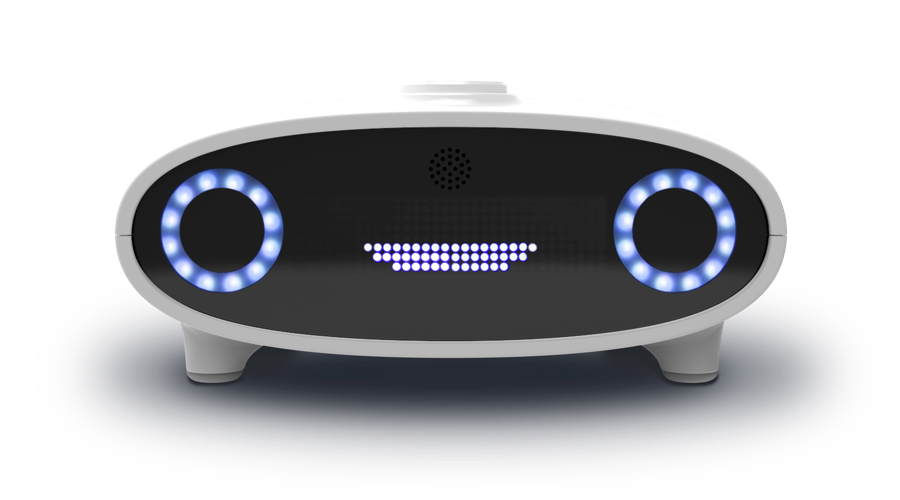
The Future of Assistants

Virtual assistants are everywhere these days. If you have an Android phone, iPhone, or even a Windows phone, you have a built in virtual assistant. On Android, you have Google Now. On iOS, you have Siri. On Windows, you have Cortana. These aren’t even all of your choices. There are more 3rd party assistants than you can shake a stick at. SpeakToIt’s Assistant, Hound, Amy, blah blah blah. And that’s just on your phone or tablet. If you widen the scope, you can’t help but notice Amazon’s Echo device.

Unfortunately, all of these assistants are flawed for a variety of reasons. Google Now has all the personality of a wet paper bag. Siri has virtually no customization options. Cortana is somewhere in between Siri and Google Now, but retains the faults of both. Most of the 3rd party assistants are even worse. I want to lay out what’s wrong with these assistants and how I hope we can fix them in the future to make something truly revolutionary.

Ubiquity

Assistants are limited by where they’re located. If you’re using more than one type of device, which many of us are, then you’re running into this limitation often. If you’re looking for information on your Android phone, but switch to your desktop, your desktop assistant (if you have one) isn’t aware of what you’re doing on your phone. If you ask Alexa a question, Cortana or Siri is clueless about that. There’s very little communication going on. That’s because these assistants are limited in their scope. Cortana doesn’t exist in the same space as Alexa, and Siri and Google Now barely know the other exists. About the closest you’re going to come is that they can pretty much all use Google Calendar and Contacts. Even when you’re using a 3rd party assistant like SpeakToIt’s, your assistant on your Windows desktop has no clue about your assistant on your Android phone.

Walled Gardens

I know the term has become famously (and justifiably) associated with Apple, but when it comes to assistants, that’s where all of them live. Cortana searches with Bing, Google Now with Google, Siri searches iTunes. Alexa shops Amazon. You have to delve into the 3rd party offerings if you’re going to have some choice in the matter. Even then, your choices are usually limited as most of them will go straight to Google anyway.

What We Need

So how do we fix this mess? What do we need for all of this to work together? In my opinion, we need an open source option. Something that can be put anywhere by anyone. The root of the problem with the assistants we currently have is that all of them are playing to the best interests of a single entity. Apple doesn’t want to promote Google, Microsoft doesn’t want to promote Google, and Google just wants to promote itself. If we’re going to break through the walls, we need a choice that isn’t limited by it’s origins or the shortsightedness of a single corporate entity. This works best when a project is open source.

mark1It just so happens that there is a project like this underway. It’s called Mycroft. I haven’t had the pleasure to use it yet, but on a fundamental level, I love what they’re trying to do. They have an Echo type device that brings your assistant into any room in the house whether you’re carrying your phone or not. Appearances suggest that there will be a Windows, OSX, and a Linux desktop version of Mycroft as well. This will let you use the same assistant on your computer you use in your house. Additionally, there appears to be an Android version in the works. The open source nature of Mycroft could make it the first truly ubiquitous AI assistant, and keep it from being walled in to a particular ecosystem.

I don’t want this article to come across as a sales pitch for Mycroft. I think their project is spectacular, and I hope that they are amazingly successful, but there’s work to be done for any of this to pan out. In my opinion, these devices need to be aware of each other. I’d like to see them communicate via a torrent communication network. End to end encryption between nodes. Each instance of Mycroft should be inextricably tied to the user. I want Mycroft to protect you from snooping at every level by offering TOR. I want Mycroft to have the option to communicate with more devices like the Roomba. You can’t tell me that you wouldn’t love to be able to say, “Mycroft, vacuum the floor.” and have it happen. I want Mycroft to be able to communicate. I want to be able to say, “Mycroft, share the new video of my kids with my mom.” and have my Mycroft tell her Mycroft that I have a file for her and would she like to cast it to her TV. If she says yes, have the file transferred automatically from my location to hers and played on her TV without ever having to lift a finger.

A lot of these things probably seem like pipe dreams, but I think that Mycroft’s open source nature could make it all possible. Any developer can come by and create a skill and release it upon the world. Mycroft won’t be tied down by corporate greed. Really, the sky’s the limit. Hopefully, once again, FOSS can take a good idea and make it great.

Dick Tracy the Future?

dick-tracyWelcome to the future. Well, Dick Tracy’s future anyway. The world has now been gifted by “smart watches”.

First, a disclaimer. I love my Moto 360. It’s awesome. You can argue that it doesn’t do anything that my phone didn’t already do, and you’re right. In fact, it does less than my phone. I think that’s just fine.

Here’s what I want from my smartphone.

  1. Notifications
  2. Maps
  3. Activity tracking
  4. Not much else

See, a watch is a convenience. Even non-smartwatches don’t do anything that a clock can’t do. The reason it’s there is it’s convenient. I don’t want or need it to do anything else, but there are those that disagree with me.

Now, let’s ignore the fact that Jonny Evans is a shill for Apple. He’s advocating for the Apple watch here, but it really doesn’t matter. His idea is that the watch “must ultimately replace the phone.” Personally, I think that’s a horrible idea. I think that the watch should be a phone accessory, and that the phone should ultimately replace the computer.

Watch as Phone – Dick Tracy Style

Let’s look at how this works. Your watch is your phone. OK, so how do you talk on it? It’s not exactly optimally placed to hold it up to your head, so you’re going to have to do one of two things.

  1. Speaker phone
  2. External earpiece and microphone

Speaker phones ultimately make any private conversation you’re trying to have public. Not to mention the damage powering speakers would have to the battery life of the watch. An external earpiece would be fine, but then you’re carrying extra stuff around with you just to make a private call. Neither of these options seems particularly good. Having a watch as an accessory seems like it would be just as effective. There are already several watches on the market that can make a phone call via wifi or bluetooth if connected to a phone. This solution seems like it would provide all the benefits that could be found in a “watch phone”, and only one possible negative: If you’re away from WiFi, you have to carry a phone with you.

Phone as Computer – NOT Dick Tracy Style

I see things going the other direction. I see the phone becoming the hub of our digital lives. I’ve written about this before, but I feel like I need to reiterate some of these points and clarify a little bit. I see, for most people, the phone becoming the only computer they’ll ever need. I think that in the near future, computers for the average user, will be overkill. People will own a phone that connects to their data in the cloud. If a person wants a desktop computer, they’ll be able to connect a single USB-C connector to their phone that will hook their phone to an external keyboard, mouse, and monitor. Their OS will automatically detect that they’ve gone into “desktop mode”, and switch from a single app full screen view to a more typical desktop setup with windowed applications and easy multitasking. They can easily carry their work and home life in a pocket and charge while they’re working.

Android is optimally placed for this to work. With it’s roots supported by Linux, it can easily accommodate any kind of device. Ubuntu is also a good choice. Android has good support for a mobile setup, but Ubuntu is better supported on the desktop. Both need work, but I’d put my bets on Google. News has already started to spread about a possible convergence between Android and ChromeOS. Google wouldn’t have to go full merger to make this work, just borrow some of ChromeOS’s functionality and add it to Android. Since both are based on Linux, it’s not a huge leap.

I don’t mean this for all people. I don’t think that desktop computers are going to replace servers any time soon, and I don’t think that phones will replace all desktop computers any time soon. There are just some tasks that you’re going to need a full workstation for.

Many, even possibly most, of the people I communicate with on a day to day basis will be among those that can never make a phone work as their only computer.

The trick is, the people I communicate with aren’t typical users. They code and do graphics and video production. They play games that make the most of what computer hardware has to offer. For these people, a phone is just not going to be a workable solution, but that doesn’t meant hat it won’t work for most people.

Sorry Dick Tracy, but I think you can keep your watch phone.

Disagree? I’d love to hear your perspective. Where do you think this is going to go?


Blackberry a Defense for Google Against Rockstar?

If you haven’t been watching the news today, a big bomb was dropped on Google. The Rockstar consortium (Apple, BlackBerry, Microsoft, Ericsson, Sony, and EMC) has sued Google as well as Asustek, HTC, Huawei, LG Electronics, Pantech, Samsung, and ZTE. Is there an obvious and easy way around Rockstar?

Brief History

So what happened is this. Nortel was going bankrupt. Google bid for their patents, but lost out to a consortium of companies. That consortium includes Apple, BlackBerry(then known as RIM), Microsoft, Ericsson, Sony, and EMC. Even at the time, Google’s Senior Vice President and Chief Legal Officer, wrote that Microsoft, Apple and others were engaging in hostile patent warfare against Android.

Silver Bullet?

So, how can Google and company get around this particular issue? There may be a quick and easy was to do it. Maybe. I won’t pretend to be a an expert at patent law, but I do know that one member of that consortium is not doing particularly well these days. In fact, they’ve been shopping around for a buyer. Blackberry. As a member of the consortium, they would have full rights to the patents owned by the consortium. A purchase of Blackberry by Google would bring ownership of those patents (at least partial) to Google, making the suits against Google moot.

Second Option?

Department of Justice

Even if a Blackberry purchase isn’t a possibility, there’s another possible solution out there as well. During the initial purchase, the DOJ investigated the companies involved because they were concerned (as was I) that the patents being purchased would be used in an offensive against Android. As it turns out, they were right about that (and by extension so was I). The DOJ only approved the purchase with the hopes that Rockstar would only use the intellectual property it purchased strictly to defend itself from Android initiated lawsuits. It may be that the DOJ may not take kindly to this particular aggressive action by Rockstar.

Summary

There’s quite a bit of worry out there today regarding these new suits against Google and the Android ecosystem. I’m not going to say that worry isn’t warranted, but there are options available to Google that could very well make this a minor bump in the road. We’ll have to wait and see how things pan out, but this lawsuit may not be the huge problem so many people think it’s going to be.

Antivirus for Linux

It never fails to amaze me just how the same arguments keep coming up over and over again, like bad pennies. Most of them ignore facts so blatantly it gives me a headache.

The I’m referring to today is the one about Linux Viruses.

First of all, Linux Viruses exist. Yep, it’s true, they exist. There’s actually a couple of them. Wikipedia lists an even 30 of them. There’s even Virus protection for Linux Extra resources.

True, compared to MacOS and Windows, that’s a drop in the bucket. Barely worth noticing. And that’s where the same old argument comes up time and again.

“The reason that Linux doesn’t have viruses like MacOS and Windows is because it’s not as popular!” The argument is that if more people used Linux, there actually would be viruses for Linux. The completely ignores the fact that the desktop is the exception, not the rule. Linux dominates elsewhere. Servers, smart phones, super computers, etc. Linux is kicking ass and taking names. A virus that could infect all those systems would be hugely valuable both monetarily and for a reputation. Yet, it doesn’t happen.

Even  the ones that already exist pretty much suck compared to their Microsoft and Apple counterparts.

So is there a reason to even consider running anti-virus on your Linux computer? Shockingly, the answer is still yes, but not for the same reasons some Mac users and all Windows users should.

You should run anti-virus on your Linux machine as a courtesy to your non-Linux using friends. Their systems aren’t as impervious as yours, so even though your computer is unlikely to get any infection, the same can’t be said for theirs. This also helps you in the long run when all those non-Linux computers aren’t infected blasting out TBs of garbage data out onto the Internet, slowing your connection down and filling your Inbox with spam.

In the long run, we all win.

Phil Schiller Displays Apple’s Desperation

Desperate AppleReading the comments made by Phil Schiller in a recent Wall Street Journal interview, you could smell the stink of desperation wafting off the pages.

“When you take an Android device out of the box, you have to sign up to nine accounts with different vendors to get the experience iOS comes with. They don’t work seamlessly together.”

It’s pretty obvious that Schiller has either no idea about the Android experience, or isn’t interested in telling the truth. Of course, he went on to talk about Android fragmentation (which really has no impact on the end user at all).

This follows up a rare tweet he made regarding Android security.

To me, as an Android user, all Schiller has managed to do is display a complete and utter lack of knowledge or understanding of the Android experience and environment. He suggested that Android phones are cheap giveaways by carriers, ignoring the fact that iPhones are also given away (you can get an iPhone 4 for 99 cents on AT&T if you’re a new customer or upgrading an existing plan). This is typical of Apple, where facts have never mattered. Now as they watch the mobile market slip through their fingers, the desperation becomes more and more obvious.

Microsoft Screwing The Linux Foundation

A while ago, The Linux Foundation announced a plan to allow for Linux to boot on systems with Secure Boot enabled. Lately, it has come to light that Microsoft is screwing with The Linux Foundation, and not granting the key required despite the fact that The Linux Foundation has already paid for it. Oddly enough, certain Microsoft apologists still believe that this is the fault of The Linux Foundation, despite the fact that there is nothing to support that contention. Here is a list of links that disagree with that fantasy.

Of course, this won’t convince Microsoft fans. Facts seldom do.

Florian Mueller is no Pamela Jones

Today both Google and Oracle submitted filings to the court detailing individuals that they pay to blog on their side. Google doesn’t pay anybody. Oracle pays Florian Mueller.

Rememberings of Pamela Jones

This whole court case brings me back to the SCO/IBM trial. SCO with grandiose claims, and no facts. It’s just like Oracle’s grandiose claims with no facts. I think that Oracle saw that parallel too, and saw the influence one person had over the SCO/IBM case. Pamela Jones, or pj for short. For those who are unaware, Pamela Jones was the founder of Groklaw. Groklaw covered legal news that was interesting to the free and open source software community. Of particular interest to the free and open source community at the time was the SCO/IBM trial, and Groklaw spent a great deal of time focused on it.

I shouldn’t say “focused”. I should say that Groklaw systematically destroyed any and all claims made by SCO. It really didn’t stand a chance.

History Repeating…. well Not Quite

Oracle must have remembered what happened to SCO at the hands of Groklaw. Rather than try to avoid that, they tried to turn it to their advantage. Oracle thought that if they had their very own Pamela Jones, they could easily take Google down. Enter Florian Mueller.

Mueller wrote some computer books in the 80s, and then did some publishing and distribution. He did some marketing, and founded a game company that went nowhere. After that, he campaigned against European software patents (failed at that too), and then had enough and focused on Soccer. His first post on his blog appeared on Saturday, April 3rd, 2010. Four months and change before Oracle sued Google for various copyright and patent infringement claims.

Mueller took notice of the Oracle/Google case right away, and wrote prolifically about it over the course of the case. Seldom was a positive thing said about Google. In April of 2012, Mueller decided that “transparency” was suddenly important and admitted to being on the payroll at Oracle.

Outcome of the Case

So how did things work out? Well, depends on if you’re a fan of Open Source, or if you’re Florian Mueller. Like almost every other venture Florian Mueller has been involved in, he failed. Oracle was decimated in the courts, and won only a tiny sum based on a Copyright that no one is even sure is going to be valid yet. It could be that Oracle walks away owing Google.

Why Didn’t It Work?

So, why did the this method work so well in the SCO/IBM trial, and work so poorly in the Oracle/Google trial? It’s all about the community.

Pamela Jones wasn’t interested in being known. She didn’t even tell people her name at first (she just went by pj), and there’s still only a handful of people that have met her. Florian Mueller has a big “ABOUT ME” page right on his blog with links to a brief but puffed up profile (“award-winning intellectual property activist-turned-analyst”). The profile even has a nice vanity picture where Florian looks like he’s got enough make-up on to walk the catwalk in Milan.

Pamela Jones was interested in facts. Florian Mueller was interested in lining his own pockets with Oracle’s money, and he was willing to do anything and say anything to do it.

Due to her honesty and integrity, Pamela Jones developed a loyal following in the FOSS community. Due to deep pockets Florian Mueller somehow managed to get an unexpected number of tech journalists and bloggers to believe he knew what he was talking about, at least some of the time. Despite that, he never got the community support that Pamela Jones did.

No, Florian Mueller turned out to just be another blow hard, and Pamela Jones knew he was on Oracle’s payroll long before he admitted as such.

In short (to paraphrase), I knew Pamela Jones Mr. Mueller. Pamela Jones was a friend of mine. Mr. Mueller, you’re no Pamela Jones. (I actually don’t know pj, but I wish I did.)

#boycottapple

Just wanted to make a quick note about the #boycottapple thing going on on Google+ and on Twitter. I’ve read several people saying that boycotting Apple is dumb, and that the real problem is with the patent system. To the people pointing out that the patent system is broken I have one thing to say.

DUH.

We know this people. We’re not stupid. Here’s the issue though.

The patent system is broken for the entire software industry, so why isn’t anybody boycotting EA? Why isn’t anybody boycotting Adobe? Why isn’t anybody boycotting Attachmate?

The answer is easy. EA, Adobe, and Attachmate aren’t acting like assholes. Apple is. Apple is the one going “thermonuclear” on their competitors, and they’re the one using the broken patent system to do it.

Does the Software Patent system need to be fixed? I’d argue that it doesn’t need to be fixed so much as thrown out altogether, but I think we all agree that it’s broken. That’s not the point of the #boycottapple “movement” (if you will). The point is that Apple is being a bad player, and because of their behavior, they should be boycotted.